Opening Up a Kitchen: What to Know Before You Remove a Wall
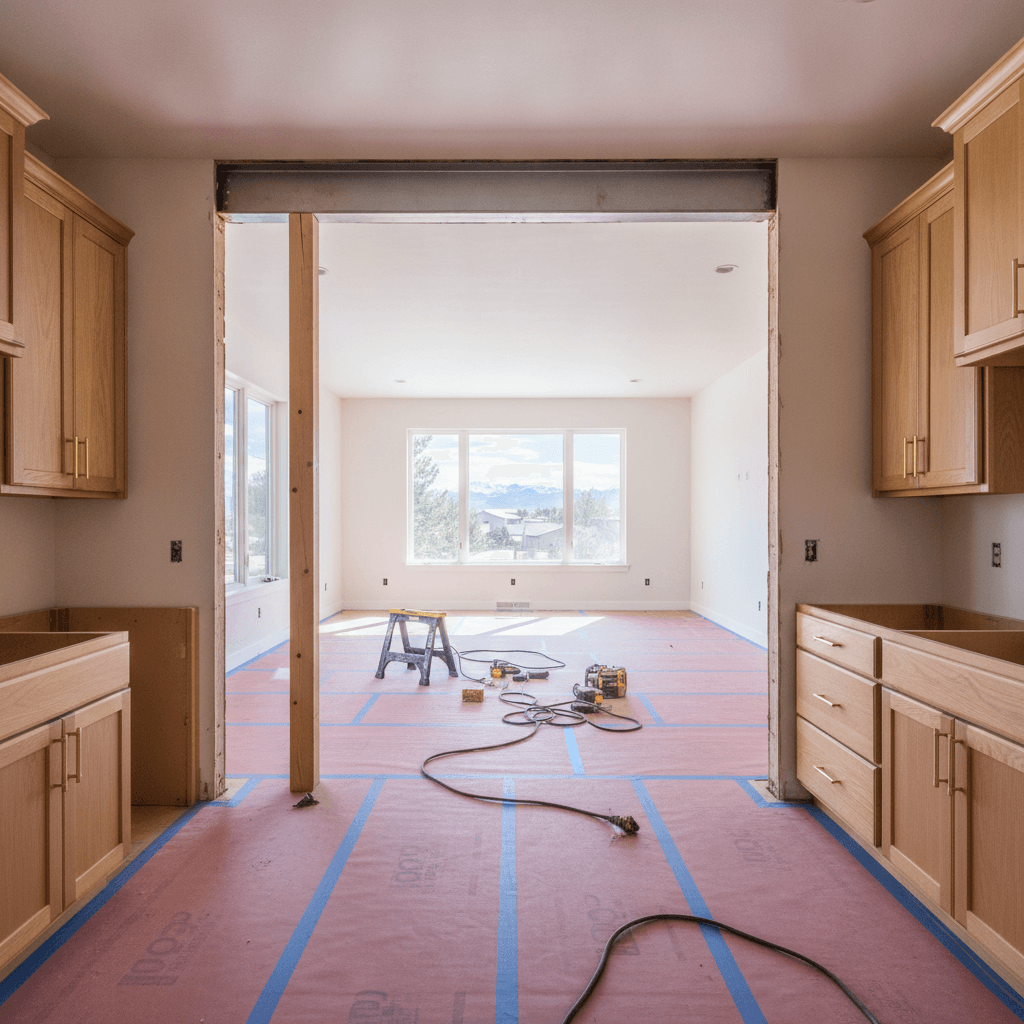
Short answer: before you remove a wall to open up your kitchen, you need to know two things — whether the wall is load-bearing, and what's hiding inside it (plumbing, wiring, HVAC ducts, or gas lines). A non-load-bearing wall with nothing critical inside is a fairly straightforward removal. A load-bearing wall can still come out, but it requires an engineered beam to carry the weight the wall was holding up. Either way, the smart move is to have the structure assessed first, then design the open layout around what's actually feasible. Never assume a wall is 'just a partition' until it's been verified.
How to tell if a wall is load-bearing
A load-bearing wall carries weight from the roof, upper floors, or ceiling joists down to the foundation. Removing one without proper support is the kind of mistake that shows up later as sagging ceilings, cracked drywall, or sticking doors. Here are the common signals that a wall may be structural — though none of these are a substitute for a professional evaluation:
- It runs perpendicular to the ceiling and floor joists. Walls that sit at a right angle to the joists above them are often carrying those joists.
- It sits roughly in the center of the home or directly above a beam, girder, or support post in the basement or crawl space.
- It stacks with a wall on the floor above. Load tends to travel straight down, so aligned walls between floors are a red flag for structure.
- It's an exterior wall. Outside walls are almost always load-bearing.
- It feels unusually thick or has a header above a doorway or opening within it.
The most reliable way to confirm is to look at how the framing actually behaves — usually from the basement, attic, or crawl space — and that's a judgment best made by a contractor or structural engineer, not a guess from the kitchen side of the drywall. When in doubt, treat the wall as load-bearing until proven otherwise.
If the wall is load-bearing, can it still come out?
Almost always, yes. Opening up a kitchen that shares a load-bearing wall with the dining or living room is one of the most common remodels we see on the Front Range. The trick is replacing the wall's support with a beam — typically an engineered LVL (laminated veneer lumber) or steel beam — sized to carry the load across the new opening. The beam can sometimes be tucked up flush into the ceiling for a clean, uninterrupted look, or left exposed as a design feature. Posts at each end transfer the weight down to the foundation.
This is where 'Affordable Quality' actually means something: the beam has to be specified correctly for your span and your home's loads. Done right, it disappears into a seamless open space. Done carelessly, it's a callback waiting to happen. A proper open-concept conversion accounts for the beam, the supporting posts, and where that load lands all the way down — not just the part you can see.
What's living inside the wall matters as much as the structure
Even a non-load-bearing wall is rarely empty. Before anything comes out, it's worth knowing whether the wall contains:
- Electrical wiring, outlets, and switches that will need to be rerouted
- Plumbing supply or drain lines, especially if a bathroom or kitchen sink backs up to the wall
- HVAC ductwork or cold-air returns that move air through the wall cavity
- Gas lines feeding a range or appliance
Rerouting these is normal and expected — it just needs to be planned, because it affects both the timeline and how the finished space comes together. A wall that looks simple on the surface can hold the supply for half your kitchen's outlets. This is also where the broader process matters: structural and mechanical changes typically involve your city's inspection and approval process, which the homeowner's general contractor coordinates. We focus on the craftsmanship of the remodel itself and work cleanly within that framework.
The design tradeoffs of going open-concept
Open layouts are popular for good reasons, but they're not free of compromise. Knowing the tradeoffs up front helps you design a space you'll love for years, not just on day one.
What you gain: more natural light flowing between rooms, better sightlines so cooks aren't cut off from guests or kids, a larger sense of space, and far more flexibility for islands, peninsulas, and seating.
What you trade: wall space disappears, and with it goes upper cabinetry and the storage it held — so storage often has to be reclaimed in an island, a pantry, or taller perimeter cabinets. Open kitchens also share their sounds and smells with the rest of the home, and a sink full of dishes is suddenly visible from the couch. Heating and cooling patterns can shift once a wall is gone, and you lose a natural spot to anchor a stove hood or hang art.
A good design answers these before demolition: Where does the lost storage go? How do we keep the kitchen's working mess out of the main sightline? Does a half-wall, a wide cased opening, or a peninsula get you 90% of the openness with more function than a full teardown? Sometimes the best 'open' kitchen isn't fully open at all — it's a thoughtfully placed opening that keeps the wins and trims the downsides. That's especially worth considering for aging-in-place layouts, where clear sightlines and an uninterrupted, walker-friendly path can be a genuine quality-of-life upgrade.
A sensible order of operations
The projects that go smoothly tend to follow the same sequence: assess the wall's structure and contents first, design the open layout around what's feasible and how you'll reclaim storage, plan the beam and any rerouted mechanicals, then handle demolition and rebuild. Getting the assessment and design right on the front end is what keeps the build predictable — and what separates a remodel you enjoy from one full of surprises.
Frequently asked
In most cases, yes. A load-bearing wall can be removed if its weight is transferred to a properly sized beam — usually an engineered LVL or steel beam — supported by posts at each end. The key is having the structure assessed and the beam specified correctly for your home's loads and span. It's very common in open-concept kitchen conversions; it just has to be engineered, not improvised.
Look for clues like the wall running perpendicular to the ceiling joists, sitting above a beam or post in the basement, stacking with a wall on the floor above, or being an exterior wall. None of these are definitive on their own — the only reliable way to confirm is a professional evaluation that looks at the actual framing. When in doubt, assume it's load-bearing until verified.
Often, yes — taking out a wall removes the surface that upper cabinets hang on. The fix is to plan for it in the design: reclaim storage with an island, a peninsula, a pantry, or taller perimeter cabinets. The best open-concept designs account for the lost storage before demolition rather than discovering it afterward.
Keep reading
Ready to start your remodel?
Free consultation and estimate · 12 months same as cash · 5-Year Labor Warranty.