Kitchen Island Ideas: Sizes, Seating, Layouts, and When an Island Makes Sense
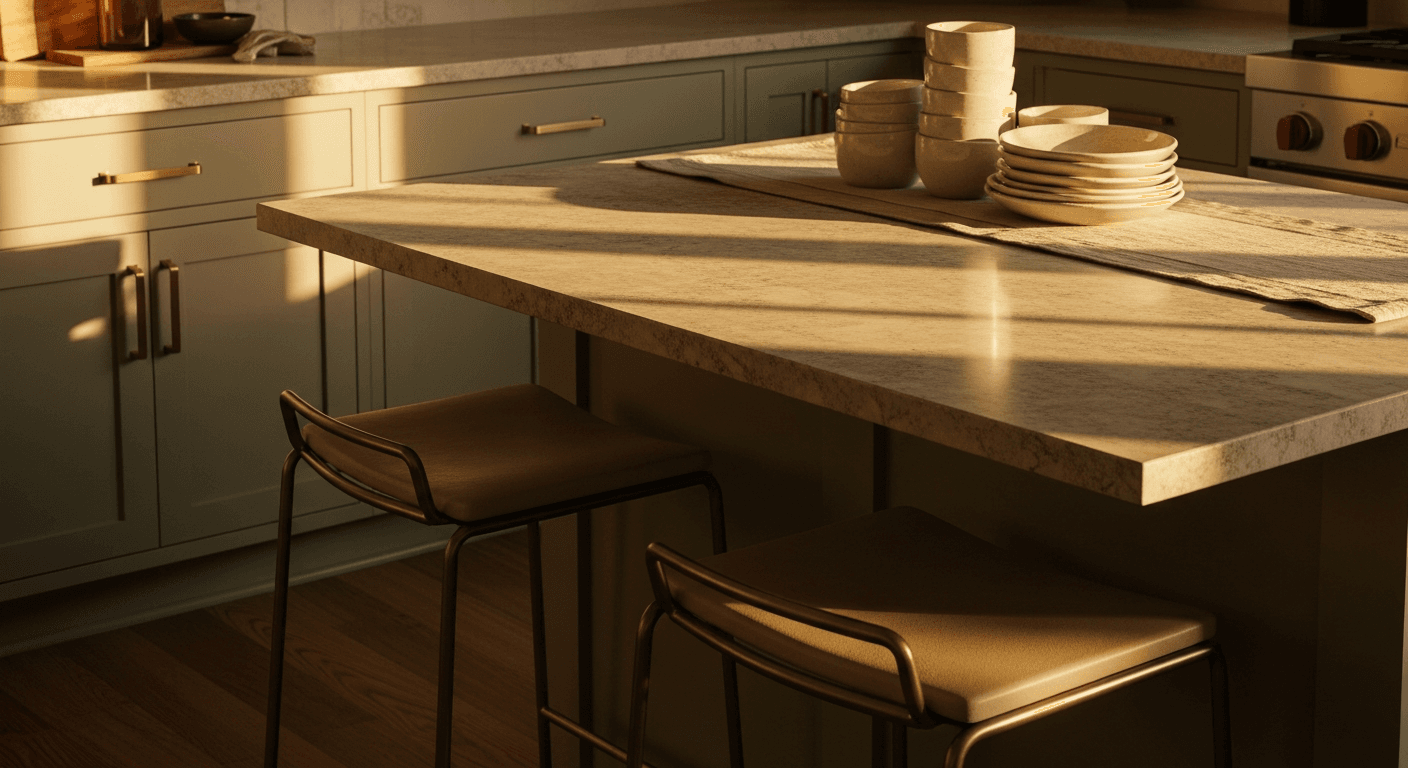
A kitchen island makes sense when you have enough floor space to keep clear walkways around it — generally a kitchen that's at least about 13 feet wide and deep — and when you actually need what an island provides: more counter space, a spot to sit, extra storage, or a place to put a sink or cooktop. If your kitchen is narrow or already tight on walkways, a peninsula or a roll-away cart usually serves you better. Everything else below is about getting the size, seating, and layout right so the island helps your kitchen instead of crowding it.
How big should a kitchen island be?
There's no single 'right' size, but there is a comfortable range. Most functional islands land somewhere around 3 to 4 feet deep and 4 to 7 feet long. Go much smaller and the island stops earning its footprint; go much larger and you create a counter so deep you can't reach the middle to clean it. A practical rule: a single-level island should stay shallow enough that you can wipe the whole top without climbing onto it — roughly an arm's reach from each side.
The number that matters even more than the island's own dimensions is the clearance around it. You want walkways wide enough to pass comfortably, open a dishwasher or oven door, and let two people work without bumping. A good target is about 42 inches of clearance on every side, and closer to 48 inches on sides where someone will be seated or where two cooks share the space. If hitting those clearances forces the island to shrink below a useful size, that's your kitchen telling you it may not be an island candidate — and that's useful to know before any demo begins.
Island seating: how much room each stool needs
Seating is the feature most people want from an island, and it's also where layouts most often go wrong. Each seat needs roughly 24 inches of width so shoulders and elbows aren't competing, and you'll want about 15 inches of knee depth underneath the counter so people aren't perched on the edge. A 6-foot island overhang comfortably seats three; a 4-foot run is realistically two.
Counter height also drives stool choice. A standard 36-inch counter pairs with counter-height stools around 24 inches tall. A raised bar section near 42 inches takes taller bar stools. Many homeowners prefer a single-level island at counter height — it's easier to use as prep space and looks cleaner — while others like a two-tier design that hides cooktop mess or dishes from anyone sitting on the social side. Both work; the right call depends on how you actually live in the room.
Popular island layouts
- Prep-and-seat island: the most common setup — open counter on the working side, seating overhang on the other. Simple, flexible, and the easiest to clean.
- Sink island: moves the sink off the wall and into the island, which is great for keeping an eye on the room while you work. Plan for the plumbing run and the cabinet space lost to the basin.
- Cooktop island: puts the range in the island with an overhead or downdraft vent. It's a striking layout but adds ventilation and clearance requirements, so seating usually moves to a separate raised tier for safety.
- Storage-and-appliance island: built around a beverage fridge, microwave drawer, or deep drawers for pots. Ideal when wall cabinetry is limited.
- Double island: two smaller islands instead of one oversized block. Reserved for large open kitchens, but it solves the 'too deep to reach the middle' problem elegantly.
- Waterfall island: a design treatment where the countertop material runs down the sides to the floor. It's about looks more than function and works with most of the layouts above.
When an island makes sense — and when it doesn't
An island earns its place when your kitchen has the floor space to keep those 42-to-48-inch walkways clear on all sides, and when you have a real job for it: extra prep counter, casual seating, hidden storage, or relocating a sink or cooktop to open up sight lines. Open-concept kitchens that flow into a living or dining area are natural fits, because the island also becomes the boundary between cooking and gathering.
An island doesn't make sense when adding one would choke your walkways or block the natural triangle between sink, stove, and refrigerator. In a galley or narrow kitchen, a peninsula attached at one end gives you most of the same benefits — counter, seating, storage — without sacrificing a fourth walkway. And if you only need occasional extra surface, a rolling cart or butcher block costs far less and can be tucked away. Forcing an island into a kitchen that can't hold one is the single most common island regret, which is exactly why a measured, in-person layout review beats guessing from a photo.
Islands and aging-in-place
If you're remodeling with the long term in mind, an island can support aging-in-place goals nicely. A section of lowered counter creates a seated-height work surface for anyone who can't stand for long or uses a wheelchair. Generous clearances — the same 42-to-48 inches that make an island comfortable for everyone — also make it navigable with a walker or chair. Rounded counter corners, drawer storage instead of deep low cabinets, and good task lighting over the island all add safety without making the kitchen look clinical. These are small design choices that pay off for decades.
A note on cost and timing
Island cost depends entirely on what you put into it — a simple prep-and-seat island is a different project from one with plumbing, a cooktop, and waterfall stone. Rather than guess at a number, the honest answer is that it scales with scope, and the best way to understand your options is a free, no-pressure estimate where we measure the room and talk through trade-offs. SEALA serves the Denver metro and Front Range from Castle Rock to Greeley, and we back our work with a 5-Year Labor Warranty plus lifetime manufacturer parts warranties. We also offer 12 months same as cash to make the timing easier.
Frequently asked
As a general guideline, you want a kitchen that's at least about 13 feet in both directions so you can keep roughly 42 inches of clear walkway on every side of the island. If hitting those clearances shrinks the island below a useful size, a peninsula or a rolling cart is usually the smarter choice. The only way to know for sure is to have the room measured.
Plan on about 24 inches of width per seat. A 4-foot seating overhang comfortably fits two stools, a 6-foot run fits three, and an 8-foot run can fit four. You'll also want around 15 inches of knee space under the counter so guests can sit comfortably rather than perch on the edge.
Yes. Sink islands and cooktop islands are both popular — a sink island lets you face the room while you work, and a cooktop island makes a dramatic centerpiece. Each adds requirements: a sink needs a plumbing run, and a cooktop needs proper ventilation and extra clearance, which usually pushes seating to a separate raised tier. We can walk through what your layout allows during a free estimate.
Keep reading
Ready to start your remodel?
Free consultation and estimate · 12 months same as cash · 5-Year Labor Warranty.