How to Plan a Kitchen Layout: The Work Triangle and Modern Zone-Based Planning
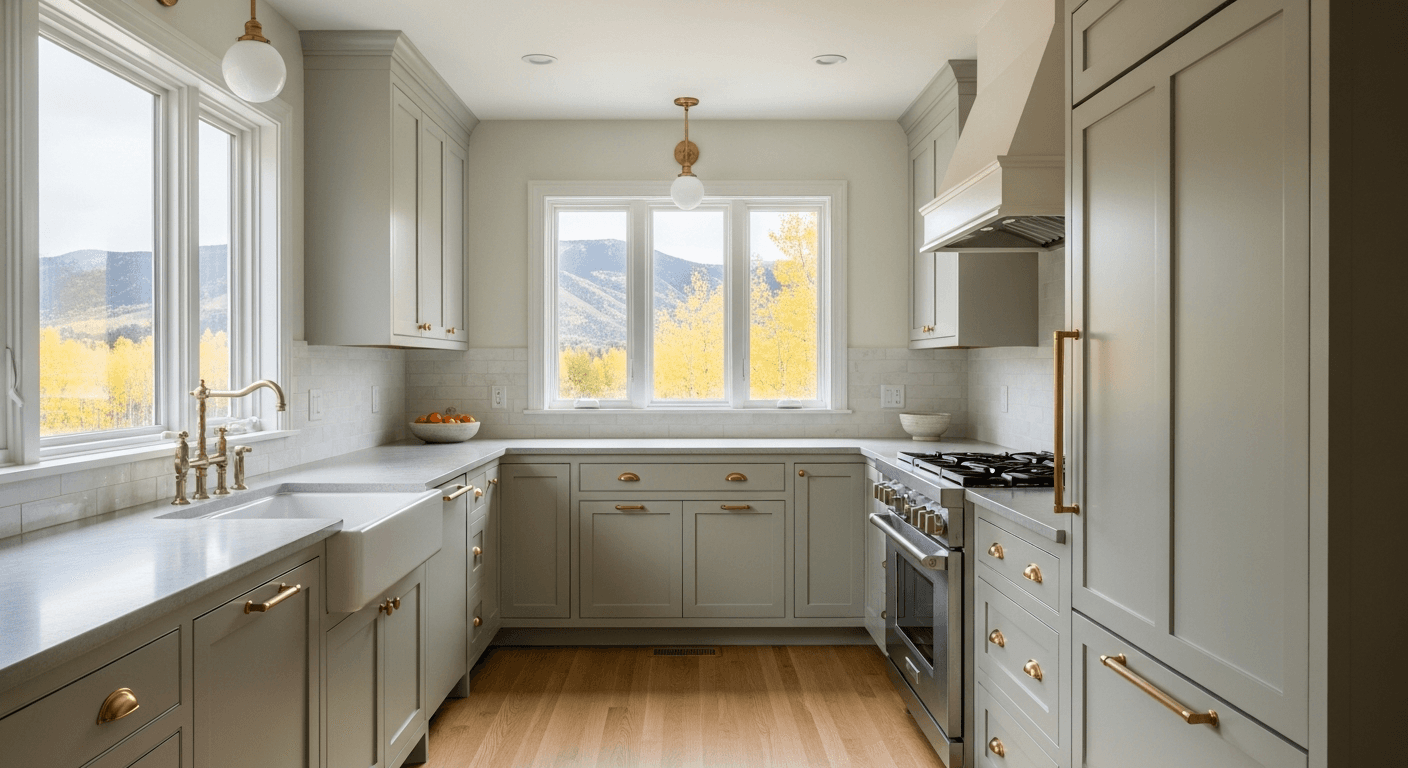
Short answer: plan your kitchen layout around how you actually move and work, not just around where things will fit. Start with the classic work triangle—keep the sink, cooktop, and refrigerator in an easy, unobstructed path between each other—then layer modern zone-based planning on top of it, grouping your kitchen into clear stations for storing, prepping, cooking, and cleaning. The triangle gives you the bones of an efficient kitchen; zones give you a layout that holds up to real life, multiple cooks, and the way today's kitchens are actually used. Get those two ideas working together and almost everything else (cabinets, the island, the appliances) falls into place.
A kitchen can have gorgeous cabinets and the nicest countertop on the block and still be a daily frustration if the layout fights you. Layout is the part you feel every single morning—how many steps to the coffee, whether two people can pass without a collision, whether the trash is anywhere near where you prep. Here is how to think about it clearly, the way we approach it for homeowners across the Denver metro and Front Range, the Affordable Quality way.
The work triangle: the time-tested starting point
The kitchen work triangle is a simple, durable idea: the three things you return to most—the sink, the cooktop or range, and the refrigerator—should form a compact, unobstructed triangle. The thinking is that you spend most of your kitchen time shuttling between those three points, so keeping them close (but not cramped) and free of obstacles makes cooking smoother and less tiring.
The traditional guidelines are worth knowing as a sanity check, even if you treat them loosely:
- Each leg of the triangle—sink to cooktop, cooktop to fridge, fridge to sink—generally works best somewhere in the four-to-nine-foot range. Shorter and the space feels cramped; longer and you're logging unnecessary steps.
- The three legs added together tend to feel right when they total somewhere around 13 to 26 feet. Much more than that and the kitchen starts to feel like a hike.
- No major traffic path should cut straight through the middle of the triangle. If people walk between the stove and the sink to get to the back door, that's a recipe for collisions—especially with hot pans.
- Tall obstacles (a peninsula corner, a poorly placed island) shouldn't break the triangle's flow.
The triangle works beautifully for the classic one-cook kitchen, and it's still the best first move when you're laying out a new space. But kitchens have changed, and that's where zone-based planning comes in.
Why zone-based planning improves on the triangle
The work triangle was designed for an era of smaller kitchens, single cooks, and far fewer appliances. Today's kitchens often have two people cooking at once, a separate microwave and coffee station, a dishwasher, sometimes a second sink or a beverage fridge, and an island doing three jobs at once. A single triangle can't capture all of that. Zone-based planning picks up where the triangle leaves off by organizing the kitchen into purposeful stations, each stocked with what it needs.
Most kitchens break naturally into five zones:
- Storage (non-perishables): the pantry and the cabinets near the fridge—canned goods, dry goods, and everyday groceries, kept together so unloading the car has one obvious destination.
- Storage (perishables): the refrigerator and freezer, plus nearby landing counter for setting bags and platters down.
- Prep: the largest stretch of open counter you can give yourself, ideally between the sink and the cooktop, with knives, cutting boards, and mixing bowls within arm's reach.
- Cooking: the range or cooktop, oven, and microwave, surrounded by the tools, pots, pans, oils, and spices you reach for while the burners are on.
- Cleanup: the sink, dishwasher, and trash and recycling, grouped tightly so scraping, rinsing, and loading is one smooth motion.
The magic is that each zone keeps its own tools where they're used. Spices and pans live by the stove. Cutting boards and knives live by the prep counter. The trash pull-out lives by the sink and the prep area, not across the room. When every station is self-sufficient, you stop crisscrossing the kitchen for one item at a time—and the whole space feels calmer and faster.
How the triangle and zones work together
These two ideas aren't competing—they're layers. Use the work triangle to position your three big anchors (sink, cooktop, fridge) so the core path is efficient. Then use zones to flesh out everything around those anchors: where the prep counter goes, where the trash lands, where the coffee station tucks in, how the island earns its keep. The triangle keeps the heart of the kitchen tight; the zones make sure every supporting task has a logical home.
This combined approach also solves the modern multi-cook problem. If two people share your kitchen, you can plan complementary zones—one person prepping at the island while another works the cooktop—so they're not fighting for the same three feet of counter. A good layout lets two cooks move around each other instead of through each other.
Layout shapes and where each one shines
The shape of your kitchen sets the rules for both the triangle and your zones. The common layouts each have a personality:
- L-shaped: two connected runs of counter along adjoining walls. It creates a natural, open triangle and leaves room for an island or a table. One of the most flexible and popular layouts for Front Range homes.
- U-shaped: three walls of cabinetry wrapping around you. Outstanding for storage and for keeping all three triangle points close, though it needs enough width so it doesn't feel boxed in.
- Galley (two parallel runs): extremely efficient for a single cook because everything is two steps away. The thing to watch is traffic flowing straight through the work zone.
- Single-wall: everything along one wall, common in smaller homes and open-concept spaces. There's no true triangle, so zone planning and a well-placed island do the heavy lifting.
- Island and peninsula layouts: an island can host its own prep or cleanup zone and add seating, but only if there's enough clearance around it. A cramped island hurts a kitchen more than no island at all.
A reliable rule for any shape: aim for roughly 42 to 48 inches of clear walkway between facing counters or an island and a run of cabinets. Less than that and two people can't comfortably pass; more than that and the triangle starts to stretch. That single dimension makes or breaks how a kitchen feels to stand in.
Designing for how you actually live
The best layout isn't the textbook-perfect one—it's the one that matches your habits. A few questions sort most homeowners quickly:
- Do one or two people usually cook? One cook can lean on a tight triangle; two cooks need separated prep and cooking zones so they're not in each other's way.
- What do you do most—bake, cook from scratch, reheat? Heavy bakers want a big, uninterrupted prep counter and nearby storage; quick-meal households prioritize an easy fridge-to-microwave path.
- Where do people gather? If the kitchen is the social hub, plan seating and a beverage zone away from the cooking zone so guests aren't standing in the splatter path.
- How do you handle trash and recycling? Pull-outs near the sink and prep counter quietly remove one of the most common daily annoyances.
- Are you planning to age in place? Layout is where accessibility really lives—wider clearances for a walker or wheelchair, varied counter heights, a seated prep area, and pull-out or drawer storage that doesn't require bending or reaching all change the floor plan, so they're best designed in from the start, not added later.
Aging-in-place planning deserves a special note, because it's one of the things we're asked about most. A thoughtful, zone-based layout with generous clearances and reach-friendly storage serves everyone—it just happens to also keep a kitchen comfortable and safe for decades. The earlier those choices go into the floor plan, the more natural and attractive they look in the finished room.
Common layout mistakes to avoid
- Forcing in an island that leaves too-tight walkways. If it squeezes the clearance below roughly 42 inches, it's costing you more than it gives.
- Running the main traffic path straight through the work triangle, so people constantly cross the cook.
- Placing the dishwasher far from the sink, which turns loading into a dripping trek across the floor.
- Putting the trash anywhere but near the prep and sink zones.
- Skimping on prep counter—the single most-used surface in the kitchen is the one people most often shortchange.
- Designing only for today and ignoring how your needs (more cooks, accessibility, resale) might shift over the years.
Most layout regrets trace back to one of these, and the good news is that every one of them is avoidable with planning up front. Layout is the cheapest thing to change on paper and the most expensive thing to change once the cabinets are in—so it's worth getting right before anything is built.
Let's map your kitchen, free
There's no single perfect layout, only the one that fits your space, your habits, and how you want to live in the room. The best way to find it is to walk your actual kitchen, talk through how you cook, and sketch the triangle and zones against your real walls, windows, and light. SEALA Kitchen & Bath serves the Denver metro and Front Range, from Castle Rock to Greeley, and we'd be glad to help you plan a layout that works beautifully day to day—no pressure. Every project is backed by our 5-Year Labor Warranty plus lifetime manufacturer parts warranties, and financing is available with 12 months same as cash. Call (720) 663-5094 or email hello@seala.com to book your free estimate. Affordable Quality, built around how you actually cook.
Frequently asked
Not outdated—just incomplete on its own. The work triangle is still the best way to position your three big anchors (sink, cooktop, and refrigerator) for an efficient core path, and it shines in single-cook kitchens. What's changed is that modern kitchens have more appliances, more zones, and often two cooks, so the smart approach is to use the triangle for the anchors and layer zone-based planning on top for everything around them.
Zone-based planning organizes a kitchen into purposeful stations—typically storage for non-perishables, storage for perishables (the fridge), prep, cooking, and cleanup—and keeps each zone stocked with the tools used there. Spices and pans live by the stove, knives and boards by the prep counter, trash and the dishwasher by the sink. It reduces back-and-forth and works especially well when two people cook at once.
A good target is roughly 42 to 48 inches of clear walkway between an island and the surrounding cabinets or counters. That gives two people room to pass and lets appliance doors and the dishwasher open without blocking the path. If your space can't hold that clearance comfortably, a smaller island, a peninsula, or skipping the island altogether usually makes the kitchen work better. For aging-in-place layouts, lean toward the wider end so a walker or wheelchair has room to maneuver.
Keep reading
Ready to start your remodel?
Free consultation and estimate · 12 months same as cash · 5-Year Labor Warranty.