Bathroom Lighting Done Right: How to Layer Task, Ambient, and Accent Light
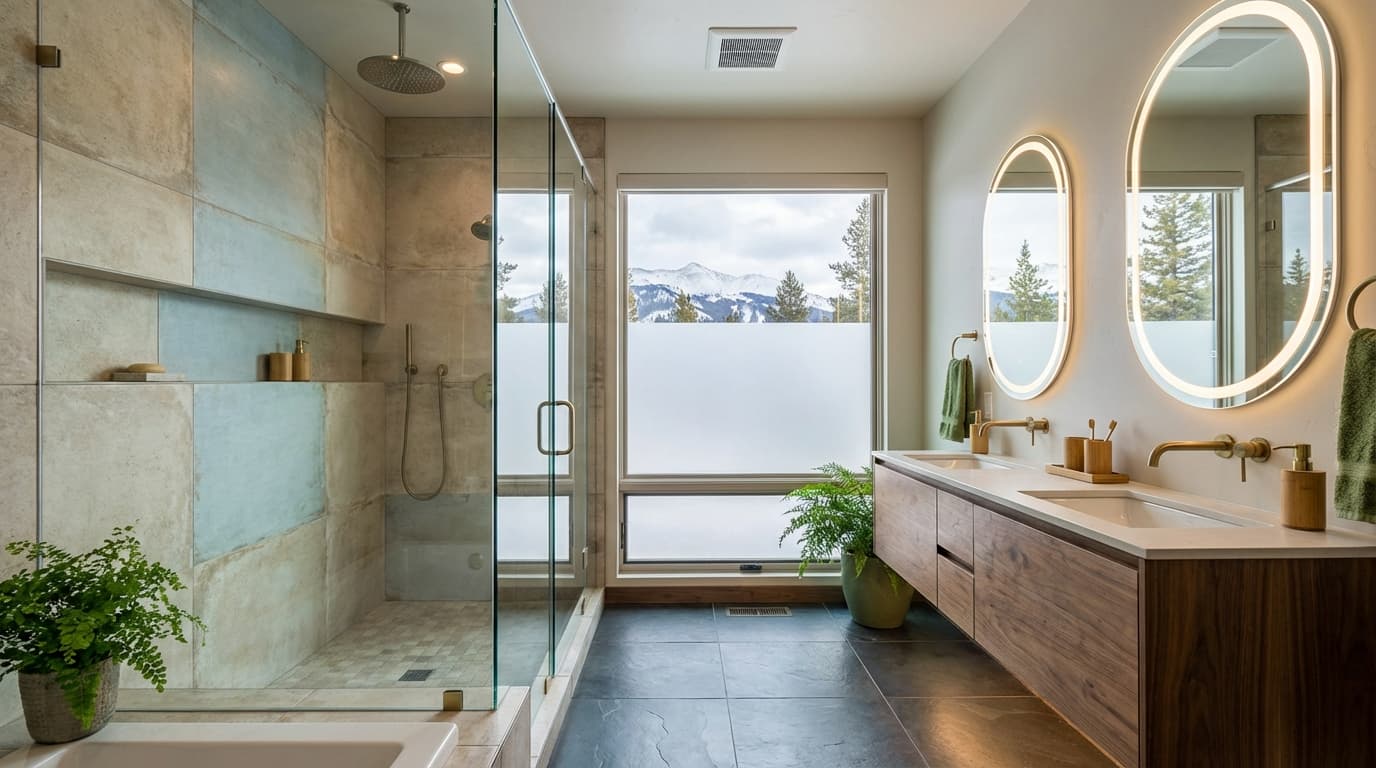
Short answer: a bathroom looks and works best when you layer three kinds of light instead of relying on one fixture overhead. Task light (at the vanity, for shaving, makeup, and skincare) does the close-up work, ambient light fills the room evenly so it feels bright and welcoming, and accent light adds warmth and depth—a sconce by the tub, a strip under a floating vanity, a small fixture in the shower. Get those three layers right, put them on separate switches and dimmers, and even a small bathroom will feel calm in the morning and spa-like at night.
Most bathrooms are lit by a single fixture in the middle of the ceiling—and that one choice is why so many people think they look tired in the mirror. A ceiling light directly overhead casts shadows downward, under your eyes, nose, and chin, which is the least flattering angle there is. The fix is not a brighter bulb. It is layering. Here is how each layer works and how to plan them for your space.
The three layers, and what each one does
Think of bathroom lighting like a room in a play: you need general stage light, a spotlight where the action happens, and a little mood lighting to set the tone. Skip any one and the room feels off—too dim, too harsh, or flat and clinical.
- Task lighting is the workhorse. It lights your face at the mirror and the surfaces where you actually do things—shaving, applying makeup, reading a label. This is the layer most bathrooms get wrong, because the only "task" light is a single fixture in the wrong place.
- Ambient lighting is the overall fill that makes the whole room feel evenly bright and safe to move around in. This can be a flush ceiling fixture, recessed cans, or a combination, ideally spread out rather than crammed into the center.
- Accent lighting is the finishing touch that adds warmth, depth, and a sense of design—a sconce beside a soaking tub, an LED strip under a floating vanity, a small recessed light over a niche, or toe-kick lighting that doubles as a soft nightlight.
When all three are present and on separate controls, you can dial the room from bright-and-functional at 6 a.m. to low-and-relaxing at 9 p.m. without ever touching a bulb. That flexibility is the whole point.
Vanity lighting: the layer that makes or breaks the room
If you do nothing else, fix the vanity. The single biggest upgrade in most bathrooms is moving light from above your head to beside your face. The reason is simple: light coming from the sides hits your face evenly and erases the harsh shadows that a top-down fixture creates.
The gold standard is a pair of sconces or vertical fixtures mounted on either side of the mirror, roughly at eye level—around 65 to 70 inches from the floor, and about 36 to 40 inches apart when space allows. Light arriving from both sides wraps your face, which is exactly why theater and salon mirrors are lit this way. If your mirror is too wide or your wall layout will not allow side sconces, the next best option is a quality fixture mounted above the mirror that throws light downward and forward onto your face, not just down the surface of the glass.
A few vanity-lighting rules that consistently pay off:
- Light beside the face beats light above it. Side-mounted sconces are the most flattering and the most useful for grooming and makeup.
- Avoid a single small fixture centered over a wide mirror. It lights the top of your head and leaves your chin in shadow.
- Use frosted or opal shades rather than bare bulbs. Diffused light is softer on the eyes and on your reflection.
- Mind the mirror's reflection. Whatever is behind you shows up in the glass, so keep the vanity zone bright and clean.
- For a double vanity, treat each sink as its own task zone—either a sconce between and beside the mirrors, or a fixture over each.
Color temperature: the setting most people get wrong
Color temperature is measured in Kelvin (K), and it decides whether your light feels warm and cozy or cool and clinical. For a bathroom, the sweet spot for the vanity is usually 2700K to 3000K—a soft, warm white that flatters skin and still gives you enough clarity to see what you are doing. Push much cooler than that and the room starts to feel like a hospital corridor; everyone looks a little washed out, and makeup applied under cold light can look wrong in daylight.
Two more numbers worth knowing, in plain terms:
- CRI (Color Rendering Index) tells you how truthfully a light shows colors, on a scale to 100. For a vanity, look for 90 or higher so skin tones, makeup, and hair color read accurately—this matters more here than almost anywhere else in the house.
- Lumens measure actual brightness. Rather than chase a single number, aim for layered, even light you can dim. Plenty of soft light from several sources beats one blinding fixture.
- Consistency matters. Mixing a warm vanity bulb with a cold ceiling bulb makes a room feel disjointed. Keep your color temperature consistent across the layers, then vary brightness with dimmers.
If you genuinely cannot decide between warm and crisp, tunable LED fixtures let you shift the color temperature with the switch—warmer for a relaxing soak, a touch cooler and brighter for a detailed morning routine.
Dimmers, switches, and safety in a wet room
Layering only works if the layers are controlled separately. Putting your vanity lights, ceiling lights, and accent lights on their own switches—each on a dimmer—is what lets one room serve a bleary-eyed morning and a candlelit-feeling evening. It is one of the most-loved upgrades homeowners mention after a remodel, and it costs very little compared to the difference it makes.
A bathroom is also a wet environment, so fixtures and placement have to respect that. Any fixture over a tub or inside a shower needs to be rated as damp- or wet-location appropriate, and electrical work near water has specific safety requirements. This is exactly the kind of thing to leave to a licensed professional rather than improvising—the look should be beautiful and the wiring should be done right. A quick note on our process: SEALA does not pull permits, so where your project requires them, the homeowner or a designated party handles that step; we will talk you through what your specific job needs during the estimate.
Accent light: the layer that makes it feel designed
Accent lighting is where a bathroom goes from finished to special, and it rarely costs much. A warm LED strip tucked under a floating vanity makes the cabinet seem to glow and acts as a gentle nightlight. A sconce beside a soaking tub turns bath time into something restful. A small light in a shower niche or over a tiled feature wall draws the eye and shows off the materials you paid for. Toe-kick lighting along the base of the vanity is a favorite for anyone who gets up at night—soft guidance without flipping on the bright lights.
These touches matter even more in an aging-in-place bathroom. Even, glare-free light, a lit path to the toilet, and a well-lit shower with no harsh shadows make the room genuinely safer to use, while still looking warm and stylish rather than institutional. Good lighting is quietly one of the most important safety features in a bathroom, and it never has to look like it.
Putting it together: a simple plan
- Start with the vanity. Add side sconces at eye level, or a quality top fixture if side-mounting is not possible, with 2700K to 3000K, 90+ CRI bulbs.
- Add even ambient fill. Use recessed cans or a flush ceiling fixture spread across the room, not just one light in the middle.
- Layer in accents. A tub sconce, an under-vanity strip, a niche light, or toe-kick lighting for warmth and a soft nightlight.
- Split the controls. Put each layer on its own dimmer so the room flexes from bright to relaxing.
- Keep it consistent and safe. Match color temperature across layers, and use damp- or wet-rated fixtures wherever water is in play.
See what the right light does for your bathroom
Lighting is one of those upgrades that looks small on a plan and feels enormous every single morning. The hard part is seeing how the layers come together against your own tile, mirror, and wall layout—which is exactly what a walk-through is for. SEALA Kitchen & Bath serves the Denver metro and Front Range from Castle Rock to Greeley, and we are happy to talk through a vanity and lighting plan that fits your space and budget, with no pressure. Our work is backed by a 5-Year Labor Warranty plus lifetime manufacturer parts warranties, and financing is available with 12 months same as cash. Call (720) 663-5094 or email hello@seala.com to book your free estimate.
Frequently asked
Beside the mirror, not above it. A pair of sconces or vertical fixtures mounted on either side at roughly eye level—around 65 to 70 inches from the floor—lights your face evenly from both sides and erases the harsh under-eye and chin shadows that a top-down ceiling fixture creates. If your layout will not allow side sconces, the next best option is a quality fixture mounted above the mirror that throws light forward onto your face, not just down the glass.
For the vanity, aim for 2700K to 3000K—a soft, warm white that flatters skin while still giving you enough clarity to shave or apply makeup. Cooler, bluer light tends to look clinical and can make makeup read wrong in daylight. Also look for bulbs with a CRI of 90 or higher so colors show accurately, and keep the color temperature consistent across your ceiling and accent lights so the room feels unified. If you cannot decide, tunable LED fixtures let you shift warmer or cooler from the switch.
You benefit from layering even in a small space—arguably more, since a single overhead fixture in a tight room creates the most unflattering shadows. You do not need a lot of fixtures: good side-lit vanity light, even ambient fill from the ceiling, and one warm accent like an under-vanity or toe-kick strip will transform a small bathroom. Putting each layer on its own dimmer is what lets one small room feel bright and functional in the morning and relaxing at night.
Keep reading
Ready to start your remodel?
Free consultation and estimate · 12 months same as cash · 5-Year Labor Warranty.